
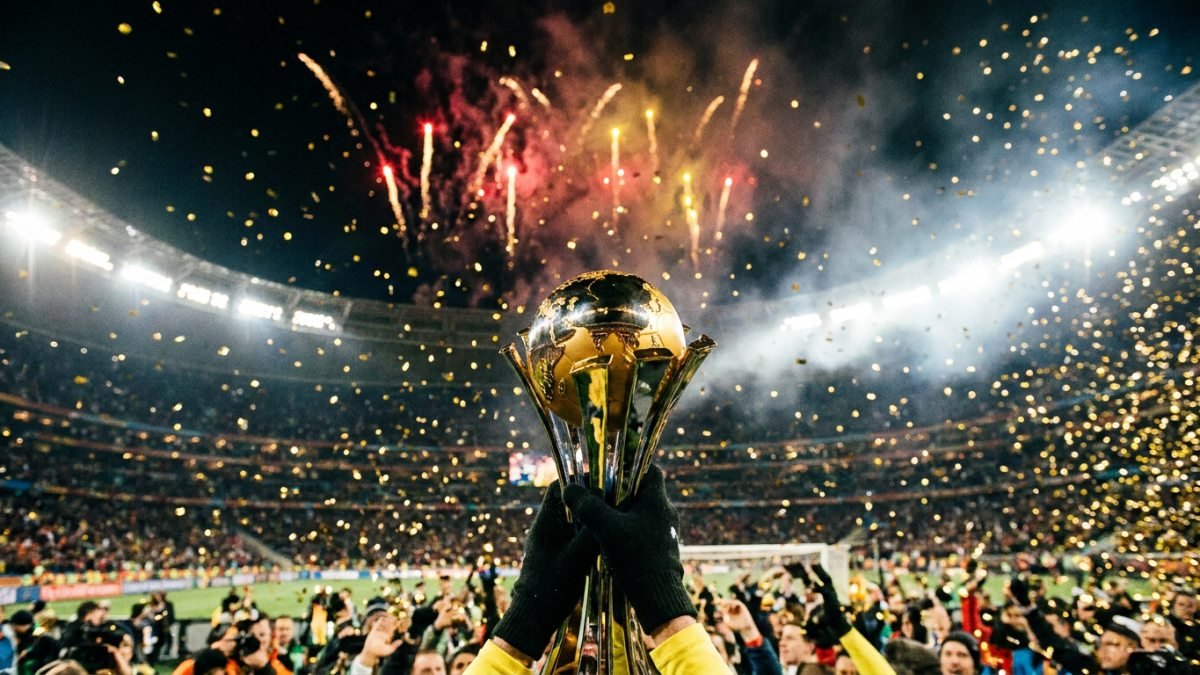
Some nights stay with you forever, and July 19, 2026 is one of them. Spain beat Argentina 1-0 at MetLife Stadium in New Jersey, in a nerve-shredding World Cup final settled in extra time by a Ferran Torres goal in the 106th minute. La Roja lifted their second World Cup — the first came at South Africa 2010 — and closed out a tournament unlike any other: the first with 48 teams and three host nations. Down here in Nuevo Vallarta we lived every second of it as if we had seats behind the goal, and in this post we break down how that final was won, why this Spain side rewrote the record books, and what a home-continent World Cup meant for everyone around Banderas Bay.
A final for the ages at MetLife.
The matchup could not have been better: Spain versus Argentina, two footballing philosophies going head to head. On one side, the team that redefined possession soccer, arriving as the stingiest defense of the tournament. On the other, the Argentina that won it all at Qatar 2022 — a side built for finals, backed by fans who turn any stadium into La Bombonera.
The stage matched the occasion. MetLife Stadium, the giant on the doorstep of New York City, was picked to crown the first World Cup ever shared by three host countries. And as you would expect from two teams that know each other inside out, the final played out like a chess match — tight, tense, the kind of game where every fifty-fifty ball feels like a penalty kick.
Ninety minutes came and went without a goal, and the final headed to extra time. By then, nobody at Guicho's was sitting down: the bar, the tables, the sidewalk out front — everyone on their feet, half in red shirts, half in sky blue and white, plus a crowd of neutrals who just wanted to see a goal. If you have ever watched a World Cup final in a packed sports bar, you know exactly the feeling: the collective gasp on every cross, the nervous laughter after every near miss, the wave of noise every time the ball got anywhere near either box. Scoreless does not mean boring — not when a world title is on the line.
Minute 106: Ferran Torres writes his name in history.
And the goal came. In the 106th minute, Ferran Torres broke the deadlock and set off pure bedlam. One goal — but the kind that is worth a star on the jersey: the strike that won Spain the World Cup and went straight into the highlight reel of the greatest moments in the history of their national team.
For Ferran, a forward raised in the elite of Spanish soccer with years of national-team experience behind him, that ball hitting the net made him an instant legend. Back in 2010 it was Andrés Iniesta who decided an equally suffocating final against the Netherlands — also in extra time, also by a single goal. Sixteen years later, history handed that role to Ferran Torres. Some scripts feel like they were written in advance.
The closing minutes: sweating it out to the whistle
What followed the goal was the good kind of suffering. Argentina threw everything forward, the way reigning champions do when they refuse to hand over the crown, and Spain protected the lead with the same discipline they had shown all tournament long. Every clearance was cheered like a goal, every minute on the clock felt like five. When the final whistle blew at last, one roar filled the room: Spain, champions of the world for the second time.
The red wall: a record that may never fall.
The stat that defines this championship team is not an attacking number — it is a defensive one. Spain conceded a single goal in 8 World Cup matches. One. That is the fewest goals ever allowed by a World Cup champion, and it tells you everything about this team's identity.
Keeping the ball is one thing — Spain has done that better than anyone for two decades. Grinding out that level of defensive seriousness game after game, in the longest World Cup ever staged, is something else entirely. Under the new 48-team format, the champion had to get through eight matches: a full group stage followed by the deepest knockout bracket in history, round after round against heavier and heavier opposition, all the way to the final. Keeping the net practically untouched through that entire run — summer heat, cross-country travel between venues, win-or-go-home pressure — is a competitive monster of an achievement.
And that solidity was no fluke or one-summer wonder. Spain arrived at this World Cup as champions of Europe — they lifted Euro 2024 in Germany — with a generation that blends the old possession school with direct, fearless attackers. The result: a team that dominates you with the ball and shuts you out without it.
The next big final? Watch it at Guicho's
Screens everywhere, wings, ice-cold beer and the loudest crowd on the bay. Grab your table for the next big game at our sports bar in Nuevo Vallarta.
Book via WhatsAppA second star: from South Africa 2010 to New Jersey 2026.
Sixteen years separate Spain's two stars. The first came at South Africa 2010, with that once-in-a-lifetime generation of Iniesta, Xavi and Casillas, who won the final against the Netherlands with an extra-time goal. The second came in 2026 — again a one-goal final, again decided in extra time. The names changed more than the method: control the ball, stay patient, and land one lethal blow at exactly the right moment.
With this title, Spain joins the short list of nations with more than one World Cup and proves its golden era was never a generational accident — it is a playing model that keeps producing champions. Here is how the last five World Cups now stack up:
| World Cup | Host | Champion | Final |
|---|---|---|---|
| 2010 | South Africa | Spain | 1-0 vs Netherlands (extra time) |
| 2014 | Brazil | Germany | 1-0 vs Argentina (extra time) |
| 2018 | Russia | France | 4-2 vs Croatia |
| 2022 | Qatar | Argentina | 3-3 vs France (won on penalties) |
| 2026 | Mexico · USA · Canada | Spain | 1-0 vs Argentina (extra time) |
Notice the pattern? Three of the last five finals ended 1-0 in extra time. World Cup finals are almost never blowouts — they are pressure cookers won by whoever holds their nerve longest. And at that game, this Spain side was a machine.
Argentina: runners-up with their heads held high
For Argentina, falling one goal short of back-to-back titles stings — but there is nothing to apologize for in their tournament. La Albiceleste reached a second consecutive final, something very few nations have ever managed, and defended the Qatar 2022 crown until the dying breaths of extra time. At Guicho's, the Argentine half of the house walked out heartbroken but applauding: two straight World Cup finals is the mark of a giant, full stop.
The World Cup that changed everything: 48 teams, 3 countries.
Beyond the champion, 2026 will go down as the World Cup that launched the boldest format in the tournament's history: 48 teams for the first time, spread across three host nations — Mexico, the United States and Canada. Never before had a World Cup been this big, or this close to home for fans on this side of the world.
And it all started in Mexico: the opening match was played on June 11, 2026 at the Estadio Azteca, with Mexico beating South Africa 2-0. Watching the Azteca open its third World Cup — after 1970 and 1986 — gave every Mexican fan goosebumps, and here at the bar that 2-0 was celebrated like a final.
What the new format meant for fans
For the people watching, the expanded field changed the whole experience of the tournament. More teams meant more matches, more mornings and afternoons with a game on somewhere, and more countries getting to live a World Cup for the first time. For an entire month there was practically always a reason to grab a table, order a bucket of beers and argue about a group-stage tiebreaker with a stranger. If this is what World Cups look like from now on, sports bars everywhere just became the best seat outside the stadium.
El Tri's tournament — that dream opening night at the Azteca and everything that followed — gets the full treatment in our companion story, Mexico's 2026 World Cup: from the Azteca to the Round of 16. Spoiler: there was far more to celebrate than to mourn.
How the final felt in Nuevo Vallarta.
A World Cup in North America, with kickoff times made for Mexico, hits different. For a whole month, the entire bay lived glued to the screens: Canadian and American visitors, Argentine expats, Spaniards on vacation and the local crew, all mixed together at the tables of Guicho's Sports Bar, each in their own colors and all drinking the same cold beer.
The afternoon of the final was the perfect send-off. A full house from early on, a pregame of red and sky-blue flags, dead silence through ninety scoreless minutes, a roar for Ferran's goal in the 106th that must have carried to the marina, and a standing ovation for both teams at the whistle. In between, round after round of wings, burgers, tacos and micheladas from our menu — because a big game without great bar food is only half a big game.
And this is just the beginning. The sports calendar never sleeps: NFL season is around the corner, Liga MX keeps rolling, and there is boxing, baseball and everything else you could want on a big screen. If you are staying near the hotel zone or the marina — or you call the bay home — you already know the meeting point: the sports bar in Nuevo Vallarta where every game feels like a World Cup final. A table, a screen and an ice-cold beer are waiting.
FAQs.
Who won the 2026 World Cup?
Spain won the 2026 World Cup, beating Argentina 1-0 in extra time in the final played on July 19, 2026 at MetLife Stadium in New Jersey, USA.
Who scored in the 2026 World Cup final?
Ferran Torres scored the only goal of the final in the 106th minute, deep into extra time, to give Spain the 1-0 win over Argentina.
How many World Cups has Spain won?
Spain has won two World Cups: the first at South Africa 2010 and the second in 2026, clinched in the final against Argentina at MetLife Stadium.
What record did Spain set at the 2026 World Cup?
Spain conceded just 1 goal across their 8 matches — the fewest goals ever allowed by a World Cup champion.
Where was the 2026 World Cup played?
The 2026 World Cup was co-hosted by three countries — Mexico, the United States and Canada. It was the first edition with 48 teams and kicked off on June 11, 2026 at the Estadio Azteca, where Mexico beat South Africa 2-0.
Where can I watch upcoming games in Nuevo Vallarta?
At Guicho's Sports Bar, the sports bar in Nuevo Vallarta where the whole 2026 World Cup was watched: big screens, wings, ice-cold beer and a stadium crowd. Book a table via WhatsApp at +52 322 199 9535.